In today’s fast-paced world, the kitchen has become more than just a place to whip up a quick meal; it’s the heart of the home where culinary masterpieces and family memories are created. If your kitchen still looks like it time-traveled from the 80s, it might be time for a modern renovation. Imagine sleek countertops, smart appliances, and a layout that actually makes sense—sounds dreamy, right?
Table of Contents
ToggleOverview of Modern Kitchen Renovations
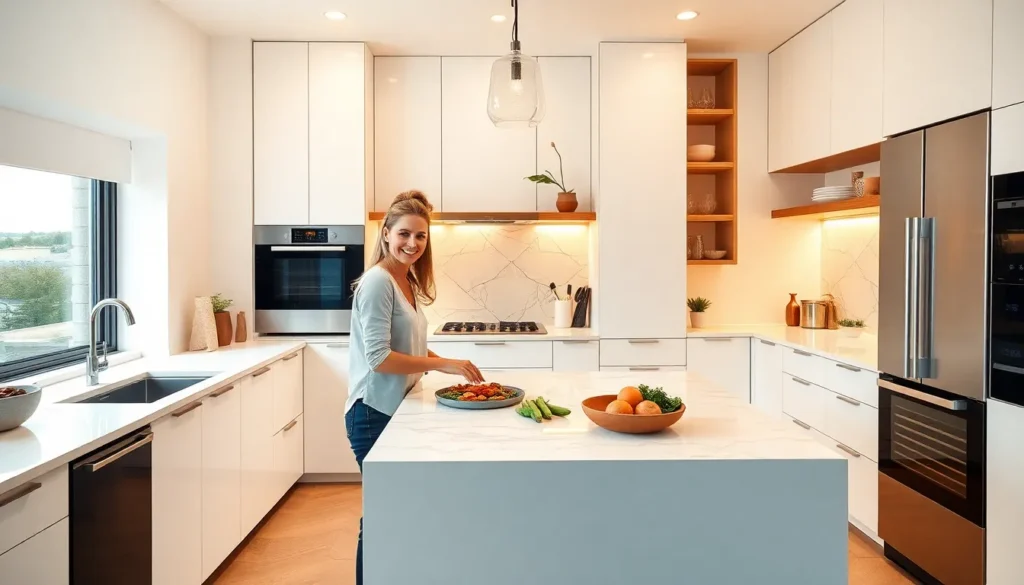
Modern kitchen renovations focus on functionality and aesthetics. Current trends include open-concept designs that enhance flow between spaces. Homeowners prioritize maximizing storage with innovative cabinetry solutions that conceal appliances and clutter.
Sleek countertops made of materials like quartz and granite offer both durability and style. Smart appliances play a key role; they integrate advanced technology to facilitate cooking and energy management. Energy-efficient models also contribute to sustainability, reducing utility costs.
Lighting design is critical in modern renovations. It incorporates ambient, task, and accent lighting to create warmth and ambiance. Under-cabinet lighting improves visibility for tasks while pendant lights over islands enhance visual interest.
Color schemes trend towards neutral palettes, with whites, blacks, and grays dominating. Accents of bold colors appear in backsplashes and accessories, providing visual impact without overwhelming the space.
Open shelving remains popular, allowing decorative items and dishware to double as art. This design choice also fosters a personal touch, reflecting individual style.
Many renovations include multipurpose islands, serving as both prep areas and casual dining spaces. These islands accommodate seating and often incorporate additional storage, enhancing overall efficiency.
Modern kitchen renovations prioritize functionality, aesthetics, and innovative technology. By focusing on these elements, homeowners create inviting spaces that meet the needs of everyday life.
Key Trends in Modern Kitchen Design
Modern kitchen design embraces functionality and style, reflecting the evolving needs of households. These trends prioritize open spaces, advanced technology, and sustainability.
Open Concept Layouts
Open concept layouts enhance connectivity within homes. They enable seamless interaction between the kitchen and adjacent living areas, creating a more inviting atmosphere. Homeowners appreciate this design for its ability to accommodate gatherings and daily routines equally. Space becomes fluid, allowing for easier movement during cooking and entertaining. Walls often come down, leaving bright, airy spaces that facilitate family bonding.
Smart Kitchen Technology
Smart kitchen technology transforms meal preparation and energy efficiency. Appliances like smart ovens, refrigerators, and dishwashers integrate with home automation systems. Users control them remotely via smartphones, optimizing convenience and reducing waste. Additionally, innovative features such as voice activation and energy monitoring promote sustainability. Kitchens equipped with these advancements enhance overall functionality and modern living.
Sustainable Materials
Sustainable materials play a crucial role in modern kitchen renovations. Homeowners increasingly choose eco-friendly options like recycled countertops and bamboo cabinetry. These materials reduce environmental impact while delivering durability and style. Furthermore, sustainable choices enhance indoor air quality, benefiting health and wellness. Incorporating such elements contributes to a conscientious design that reflects a commitment to the environment and responsible living.
Essential Features of a Modern Kitchen
Modern kitchens showcase a blend of aesthetics and functionality. Prioritizing quality, style, and organization ensures a space that serves culinary needs and family gatherings.
High-Quality Appliances
Investing in high-quality appliances enhances both performance and efficiency. Brands like Bosch, Whirlpool, and GE offer smart technology that integrates seamlessly with home systems. Energy-efficient models reduce utility costs while providing superior cooking experiences. These appliances not only perform well but also elevate the kitchen’s visual appeal, often featuring sleek stainless steel or custom panel designs. Convenience is key in modern kitchens, making appliances that support multitasking essential.
Stylish Lighting Solutions
Transforming a kitchen’s ambiance often comes down to lighting. A mix of ambient, task, and accent lighting creates a layered effect. Pendant lights over islands and under-cabinet lighting enhance work areas and showcases decorative elements. Dimming options allow flexibility, adjusting brightness for various occasions. LED technology provides energy efficiency and longevity while offering various styles to match modern decors. Thoughtful lighting solutions elevate the kitchen’s aesthetic and functionality.
Functional Storage Options
Clever storage solutions maximize space and minimize clutter. Customized cabinetry often includes pull-out shelves, lazy susans, and hidden compartments to store essentials neatly. Open shelving adds a decorative touch, promoting accessibility while displaying personal items. The use of drawer dividers keeps utensils organized, enhancing daily efficiency. Corner cabinets with rotating systems utilize otherwise wasted space effectively. Modern storage options reflect a commitment to both design and practicality, keeping kitchens orderly.
Budgeting for Your Renovation
Budgeting for a kitchen renovation requires careful planning and consideration. First, homeowners should establish a clear budget that encompasses all aspects of the project, including materials and labor. Understanding the total cost helps avoid surprises down the line.
Next, the average kitchen renovation can range from $15,000 to $50,000, depending on the scale and scope of the updates. Allocating funds for high-quality materials ensures durability and long-term satisfaction. Many homeowners prioritize investments in countertops, cabinets, and appliances as these elements significantly impact both functionality and visual appeal.
Considering financing options is also crucial. Some choose personal loans or home equity lines of credit to fund renovations, allowing for immediate upgrades while spreading the cost over time. These financing opportunities enable homeowners to invest in premium materials and smart technology, key features of modern kitchen design.
In addition, it’s important to reserve 10% to 20% of the budget for unexpected expenses. Renovations often uncover hidden issues, such as plumbing or electrical upgrades, that demand immediate attention. Having a contingency fund helps maintain project momentum without financial stress.
Researching quotes from multiple contractors also aids in effective budgeting. Different quotes provide insights into labor costs and help find the best value for the desired quality. Effective communication about the project vision ensures that contractors align with expectations, resulting in a smoother renovation process.
Lastly, adopting a phased approach can be beneficial for budget management. Prioritizing tasks allows homeowners to invest in essential upgrades first, like replacing countertops or installing new appliances, with cosmetic updates postponed for later. This method maintains functionality while offering flexibility in budget allocation.
Tips for Hiring a Contractor
Selecting the right contractor is crucial for a successful kitchen renovation. Begin by researching local contractors with expertise in modern kitchen renovations. Look for online reviews and testimonials to gauge their reputation and quality of work.
Evaluate multiple quotes to compare prices and services offered. It’s essential to assess how each contractor communicates project expectations and budget considerations. Focus on getting a detailed breakdown of costs, as transparency helps avoid surprises later.
Verify credentials, including licenses and insurance. Contractors should carry liability insurance for protection against damages and workers’ compensation to cover any injuries on-site. Ask for references from prior clients to gain insight into their reliability and craftsmanship.
Schedule interviews with potential contractors. This allows for a personal connection and an opportunity to assess their understanding of your vision. Discuss your ideas, materials, and preferred designs during these meetings to ensure alignment with your objectives.
Review past projects by each contractor. Photographs of completed renovations can highlight their design capabilities and attention to detail. Consider visiting previous job sites if possible, offering first-hand insight into their work standards.
Establish a clear timeline for the renovation project. Contractors that provide realistic timeframes contribute significantly to your overall satisfaction. Discuss milestones and potential delays from the outset to maintain open communication throughout the process.
Verify the terms of the contract. All agreements should detail the scope of work, payment schedules, and warranty information. Ensuring clarity in these elements helps establish trust and sets a foundation for a positive working relationship.
Modern kitchen renovations are more than just aesthetic upgrades; they represent a shift towards functional and sustainable living. By embracing open-concept designs and smart technology, homeowners can create spaces that enhance daily life and foster connection. The use of durable materials and innovative storage solutions ensures that kitchens not only look great but also work efficiently.
Investing in quality appliances and thoughtful lighting can significantly elevate the overall ambiance. With careful planning and the right contractor, transforming an outdated kitchen into a modern masterpiece is entirely achievable. Ultimately, a well-designed kitchen can become the heart of the home, where both culinary creativity and family bonding thrive.