Keeping indoor plants alive shouldn’t require setting daily phone reminders or enlisting a neighbor every time you leave for a long weekend. Self watering pots handle the tedious part of plant care, consistent moisture, so gardeners can focus on light, feeding, and actually enjoying their greenery. These systems use a built-in reservoir and wicking mechanism to deliver water directly to roots over several days or weeks, depending on pot size and plant type. For anyone juggling work travel, forgetful watering habits, or a crowded windowsill of thirsty tropicals, the right self watering planter can mean the difference between lush foliage and crispy brown leaves.
Table of Contents
ToggleKey Takeaways
- Self watering pots use a built-in reservoir and wicking mechanism to deliver consistent moisture to roots over 7–21 days, eliminating the stress cycle of overwatering and underwatering that kills most indoor plants.
- The best self watering pots for indoor plants prevent root rot by drawing moisture upward through capillary action rather than allowing soil to become waterlogged, making overwatering nearly impossible.
- Lechuza Classico pots lead the market with German engineering and 12-day water capacity ($30–$80), while Mkono offers budget-friendly options ($12–$25) for smaller plants and Cole & Mason handles large specimen plants with 2-gallon reservoirs.
- Match pot size to your plant’s root spread and your travel schedule: choose 1–2 gallon reservoirs for trips lasting two weeks or longer, and always use well-draining potting mix with airy blends of peat, perlite, and bark.
- Self watering planters reduce spills, require fewer weekly waterings, and develop stronger root systems, but they still need proper light, occasional fertilizer, and salt-buildup flushing to keep plants truly healthy.
What Are Self Watering Pots and How Do They Work?
Self watering pots consist of two main parts: an outer reservoir that holds water and an inner growing chamber for soil and roots. A wicking system, usually a fabric wick, porous insert, or perforated platform, draws water upward from the reservoir into the soil through capillary action. Think of it like a sponge pulling liquid from a shallow dish.
Most designs include a fill spout or opening that lets the user pour water directly into the reservoir without disturbing the plant. A water-level indicator (a simple float gauge or viewing window) shows when the reservoir needs refilling. Depending on pot size and plant water needs, refills typically happen every 7 to 21 days.
The system works best with well-draining potting mix, never garden soil, which compacts and blocks capillary flow. Roots access moisture as needed, reducing the risk of overwatering or letting soil dry out completely. That said, self watering pots aren’t foolproof. Plants still need proper light, occasional flushing to prevent salt buildup, and periodic fertilizer. The pot automates hydration, not the entire care routine.
Top Benefits of Using Self Watering Planters Indoors
Consistent moisture levels are the biggest advantage. Roots stay evenly hydrated, which prevents the stress cycle of drenching and drying that causes leaf drop, stunted growth, and pest susceptibility. Ferns, calatheas, and peace lilies, plants notorious for dramatic wilting, thrive under steady moisture.
Reduced watering frequency frees up time and travel flexibility. A 10-inch self watering pot can hold enough water for two to three weeks, depending on humidity and plant size. No more rushing home to water or bribing friends to plant-sit.
Fewer water spills and stains matter in apartments and rental homes. The closed reservoir prevents runoff onto wood floors, carpets, or furniture. Most pots eliminate the need for saucers, keeping surfaces dry.
Healthier root systems develop when moisture is drawn upward rather than poured from above. Roots grow downward toward the water source, creating stronger anchoring and nutrient uptake. Top watering, by contrast, can leave surface roots shallow and weak.
Lower risk of root rot might sound counterintuitive, but self watering systems prevent soil from staying waterlogged. The reservoir sits below the root zone, and wicking delivers only what the soil can absorb. Overwatering, the leading cause of houseplant death, becomes much harder to do.
Our Top Picks for Best Self Watering Pots in 2026
Best Overall Self Watering Pot
Lechuza Classico planters combine German engineering with clean, modern design. Available in diameters from 9 to 17 inches, they feature a removable liner, integrated water-level gauge, and a substrate insert that prevents root contact with standing water. The reservoir holds enough water for 12 days in typical indoor conditions.
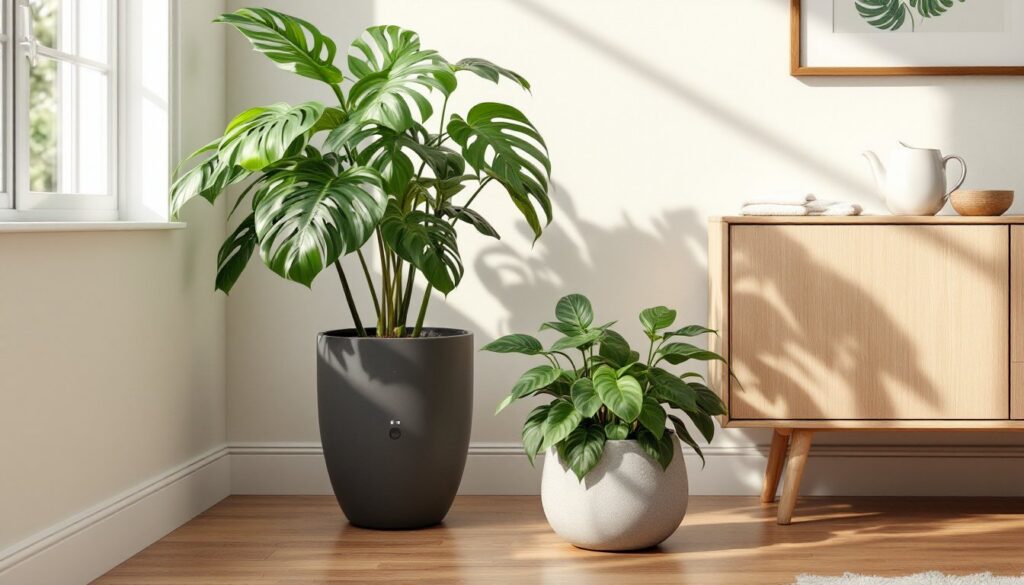
The two-piece construction makes repotting straightforward, lift the inner liner, refresh soil, and drop it back in. Drainage plugs on the reservoir allow outdoor use if needed. The matte finish resists UV fading and comes in neutral tones that suit most interiors. These pots work particularly well for self-sufficient watering systems that keep moisture consistent for medium to large foliage plants like monstera, fiddle-leaf fig, or snake plants.
Cost consideration: Lechuza pots run $30 to $80 depending on size. The price reflects durability, expect five-plus years of use with basic care.
Best Budget-Friendly Option
Mkono Self Watering Planters offer solid performance at a fraction of premium pricing. These plastic pots include a cotton rope wick, removable inner pot, and water-level window. Sizes range from 5 to 8 inches, ideal for herbs, pothos, or smaller tropical plants.
The design is straightforward: fill the outer pot through a side opening, and the wick draws water into the soil. The translucent water gauge shows reservoir level at a glance. While the plastic feels lighter than ceramic or resin alternatives, it’s UV-stable and won’t crack from minor knocks.
Trade-off: The reservoir holds enough water for roughly one week, less than higher-end models. For compact spaces or testing self watering systems before investing in larger pots, Mkono delivers reliable function. Prices typically range from $12 to $25 for a set of three.
Best for Large Indoor Plants
Cole & Mason Self Watering Planter (14- to 18-inch models) handles floor plants and statement greenery without constant attention. The deep reservoir, up to 2 gallons in the 18-inch version, supports large root systems for three weeks between fills. A top-mounted fill tube and clear indicator simplify maintenance.
The reinforced resin construction supports the weight of mature plants and wet soil without bowing. Drainage overflow ports prevent accidental overfilling, a common issue when multiple people water the same plant. The neutral stone or charcoal finishes blend with hardwood floors and tile.
Best use case: Rubber plants, dracaena, large philodendrons, or any specimen that would otherwise need daily checks. Expect to pay $60 to $120 depending on size. These pots suit permanent indoor gardening setups where moving or repotting happens infrequently.
How to Choose the Right Self Watering Pot for Your Plants
Match pot size to plant root spread, not foliage size. A 6-inch root ball fits comfortably in an 8-inch self watering pot, leaving room for growth. Oversized pots hold excess water the plant can’t use, raising the risk of anaerobic soil conditions and root disease.
Check reservoir capacity against your watering habits. If travel or work keeps someone away for two weeks at a time, a pot with a 1- to 2-gallon reservoir is essential. For daily home routines, a smaller reservoir works fine and takes up less floor space.
Consider material and weight. Plastic and resin pots are lightweight and affordable but may tip over with top-heavy plants. Ceramic or glazed terracotta adds stability and visual weight, though it costs more and can chip. For renters moving frequently, plastic makes sense. For permanent living room fixtures, invest in ceramic.
Evaluate water-level indicators. Float gauges offer the clearest read, while translucent windows require bending down and squinting. Some budget models skip indicators entirely, forcing users to guess or tip the pot to check, a hassle with large plants.
Look for drainage overflow features. A small port or hole near the top of the reservoir prevents flooding if someone accidentally overfills or if a houseguest “helps” with watering. This feature is critical for pots placed on hardwood or near electronics.
Test the fill opening. A narrow spout is fine for a watering can with a long neck, but awkward if using a pitcher or cup. Top-fill designs are easier to manage but may disturb foliage on bushy plants.
Match aesthetics to the space, not trends. A matte black cylinder disappears against dark walls: a white glossy finish pops on open shelving. Decorative patterns and colors are fine if they complement existing home decor choices, but neutral tones offer more flexibility if furniture or paint changes.
Confirm compatibility with potting mix. Self watering systems require airy, well-draining media, typically a blend of peat, perlite, and bark. Dense, moisture-retentive mixes (like those for succulents) don’t wick properly. Check the manufacturer’s soil recommendations before filling.
Budget realistically. Entry-level pots start around $10, mid-range options run $25 to $50, and premium ceramic or designer planters can exceed $100. Spending more usually buys larger reservoirs, better materials, and longer lifespan. For a mixed collection, invest in a few high-quality pots for prized plants and use budget versions for propagation or seasonal greenery.