Most bathrooms are packed with synthetic materials, cleaning chemicals, and moisture, a recipe for stale air and potential mildew. But instead of running an electric air purifier 24/7, there’s a simpler, more natural fix: strategically chosen houseplants. Bathrooms actually offer ideal growing conditions for certain species, thanks to high humidity and consistent warmth. The right plants don’t just filter airborne toxins like formaldehyde and ammonia: they also regulate moisture, reduce mold spores, and add living texture to an often-overlooked room. This guide covers which species tolerate low light and steam, how to keep them alive without daily fussing, and where to place them so they actually thrive.
Table of Contents
ToggleKey Takeaways
- Air purifying plants for bathrooms remove harmful VOCs like formaldehyde, benzene, and toluene while naturally regulating humidity and reducing mold and mildew.
- Snake plants, pothos, and ZZ plants excel in low-light bathrooms, requiring minimal watering every 2–4 weeks and tolerating neglect better than most houseplants.
- Boston ferns, peace lilies, and orchids thrive in steam-filled bathrooms with high humidity, actively filtering toxins and releasing moisture back into the air.
- Proper drainage with holes in pots, consistent lighting (natural or 12–14 hours of grow light daily), and monthly leaf cleaning are essential for bathroom plant success.
- Strategic placement on windowsills, floating shelves, hanging planters, and corner étagères maximizes both plant health and bathroom aesthetics without compromising water safety.
Why Bathrooms Are Perfect for Air Purifying Plants
Bathrooms combine two factors most houseplants crave: high relative humidity (typically 50–70% after a shower) and stable temperatures (usually 65–75°F year-round). That mimics the understory environment of tropical rainforests, where many popular houseplants originate.
Air quality in bathrooms can be worse than you’d think. Off-gassing from vinyl flooring, grout sealers, and aerosol cleaners releases volatile organic compounds (VOCs) like benzene, toluene, and formaldehyde. Add in ammonia from cleaning products and you’ve got a chemical cocktail. Plants metabolize these compounds through leaf stomata and root-zone microbes, converting them into harmless byproducts.
Moisture control is another bonus. Plants transpire water vapor, but they also help stabilize humidity swings, useful in bathrooms prone to condensation or dry air from exhaust fans. That balance discourages mold and mildew on grout and caulk lines.
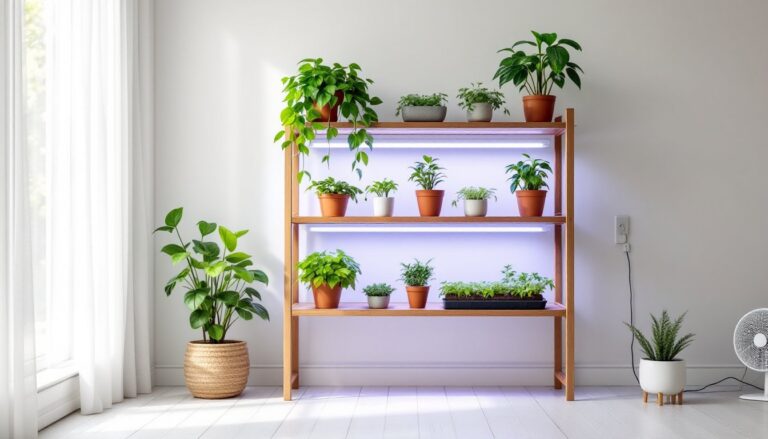
One caveat: if your bathroom has zero natural light and you never crack a window, you’ll need to supplement with a grow light (look for full-spectrum LEDs rated 2,000–4,000 lumens). Plants can tolerate low light, but they can’t photosynthesize in total darkness. A simple clip-on bulb on a timer works for most setups.
Top Air Purifying Plants That Thrive in Bathroom Conditions
Low-Light Champions for Windowless Bathrooms
Snake Plant (Sansevieria trifasciata) is the go-to for bathrooms with little or no window exposure. It tolerates near-darkness, irregular watering, and temperature swings. Snake plants convert CO₂ to oxygen at night, unusual among houseplants, and remove formaldehyde and benzene. The upright, sword-shaped leaves fit narrow ledges and corner shelves. Water only when the soil is bone-dry, roughly every 2–3 weeks. Overwatering causes root rot faster than neglect.
Pothos (Epipremnum aureum) trails beautifully from high shelves or shower caddies. Its waxy, heart-shaped leaves handle low light and high humidity without complaint. Pothos filters formaldehyde, xylene, and toluene, making it ideal near cleaning-product storage. It’s nearly indestructible: water when the top inch of soil feels dry, and trim leggy vines to encourage bushier growth. Pothos roots easily in water, so you can propagate cuttings to fill more spots.
ZZ Plant (Zamioculcas zamiifolia) has glossy, dark-green leaflets on thick stems that store water like a succulent. It thrives in low light and forgives missed waterings. ZZ plants remove toluene and xylene and grow slowly, so they won’t outgrow a small bathroom quickly. Let the soil dry completely between waterings, every 3–4 weeks is typical. Root rot is the only real threat, so use a well-draining potting mix.
Cast Iron Plant (Aspidistra elatior) earned its name by surviving neglect, dim corners, and temperature extremes. Broad, dark-green leaves handle low light and fluctuating humidity. It’s slower-growing than pothos but just as tough, filtering benzene and formaldehyde. Water sparingly in winter: slightly more in summer. Cast iron plant tolerates cramped root space, so it’s fine in smaller pots for years.
Humidity-Loving Plants for Steam-Filled Spaces
Boston Fern (Nephrolepis exaltata) thrives in the steam and moisture of a shower-adjacent spot. Its lacy fronds act as natural humidifiers, releasing moisture while filtering formaldehyde and xylene. Boston ferns need consistent moisture, never let the soil dry out completely, and prefer indirect or filtered light. Hang them in a macramé planter or set on a pedestal near the tub. Mist weekly if your bathroom runs dry between showers.
Peace Lily (Spathiphyllum) produces elegant white spathes and tolerates low to moderate light. It’s one of the few flowering plants that handles bathroom conditions. Peace lilies remove ammonia, benzene, formaldehyde, and trichloroethylene. They droop dramatically when thirsty, a handy visual cue, and perk up within hours of watering. Keep soil lightly moist, not soggy. Note: peace lily is toxic to pets and children if ingested, so place it out of reach.
Orchids (Phalaenopsis species) are epiphytes that naturally grow on tree bark in humid jungles. Indirect light from a frosted or north-facing window is ideal. They pull moisture from the air, so high bathroom humidity keeps roots happy. Water once a week by soaking the bark medium, then draining completely, never leave orchids sitting in water. Orchids filter xylene and toluene and rebloom for months with minimal care.
Spider Plant (Chlorophytum comosum) produces arching, striped leaves and cascading plantlets. It handles moderate to low light and high humidity, removing formaldehyde, xylene, and carbon monoxide. Spider plants are virtually pest-free and propagate themselves via the dangling “babies.” Water when the top inch of soil dries: they tolerate occasional neglect but prefer consistent moisture.
How to Care for Bathroom Plants Successfully
Drainage is non-negotiable. Even humidity-loving plants need soil that drains. Use pots with drainage holes and a saucer to catch runoff. If you love a decorative cachepot without holes, use it as a sleeve and lift the nursery pot out to water in the sink.
Lighting trade-offs matter. A frosted window provides diffused light: a clear south-facing window may scorch delicate leaves. If your bathroom is truly windowless, install a full-spectrum LED grow bulb (6,500K color temperature) on a timer for 12–14 hours daily. Clip-on gooseneck fixtures work well above shelves.
Watering frequency shifts with ventilation. If you run an exhaust fan after every shower, soil dries faster. If you rarely ventilate, plants may need water half as often. Stick your finger 1–2 inches into the soil: if it’s dry, water thoroughly until it drains. Don’t mist daily, it’s mostly cosmetic and can promote fungal issues on thick leaves.
Fertilize sparingly. Bathroom plants grow slower in lower light, so they need less fertilizer. Use a balanced, water-soluble houseplant fertilizer (like 10-10-10 or 20-20-20) diluted to half strength, once a month during spring and summer. Skip feeding in fall and winter.
Dust and debris block photosynthesis. Wipe leaves monthly with a damp cloth to remove soap scum, hairspray residue, and dust. For fuzzy-leaved plants like ferns, rinse gently under lukewarm water in the shower.
Repot only when necessary. Most bathroom plants tolerate being slightly root-bound. Repot every 2–3 years, or when roots circle the drainage hole. Go up one pot size (e.g., from a 6-inch to an 8-inch pot) and refresh the potting mix with a blend formulated for houseplants. Heavy, moisture-retaining mixes like those for garden planning outdoors don’t drain fast enough for containers.
Watch for pests, though they’re rare. High humidity deters spider mites, but fungal gnats can appear if soil stays waterlogged. Let the top inch dry between waterings and use a soil drench of diluted hydrogen peroxide (1 part 3% peroxide to 4 parts water) if gnats appear.
Creative Placement Ideas to Maximize Your Bathroom Greenery
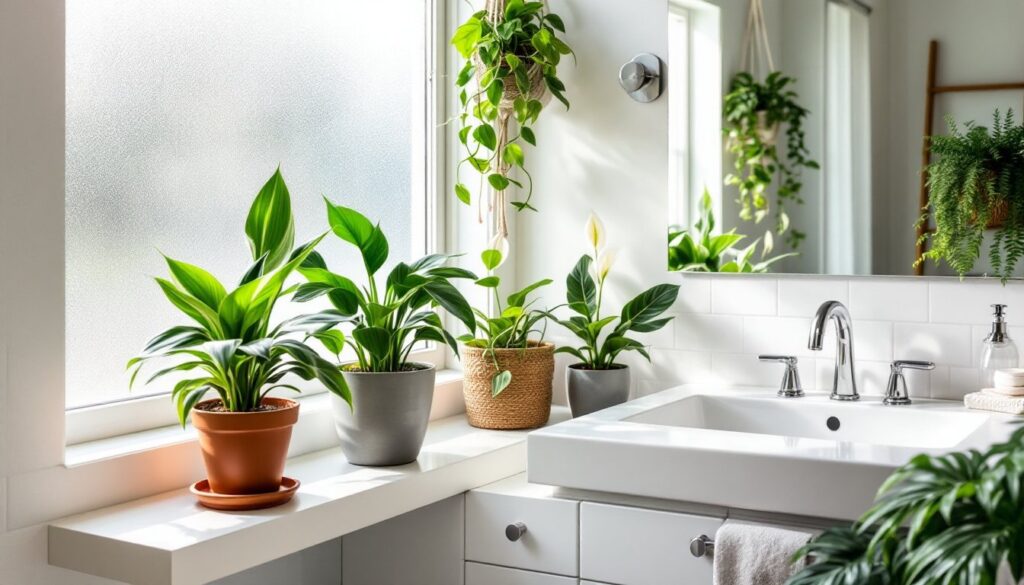
Windowsill staging: If you have a window, line the sill with small pots of snake plants, spider plants, or orchids. Use saucers or a waterproof tray to protect the sill from moisture damage. Frosted or textured glass provides ideal diffused light.
Floating shelves above the toilet or tub: Install 1×6 or 1×8 solid wood or moisture-resistant MDF shelves with concealed brackets. Space them 12–16 inches apart vertically to accommodate trailing pothos or ferns. Apply a water-resistant finish or use pre-sealed shelves rated for bathroom use.
Hanging planters in the shower zone: Use rust-proof materials, stainless steel S-hooks, nylon cord, or coated wire, to hang Boston ferns or pothos from ceiling hooks or a tension shower rod. Keep plants outside the direct spray path but within the steam envelope. Check that ceiling drywall is screwed into a joist or blocking if you’re installing a permanent hook: toggle anchors rated for 20+ pounds work for drywall-only spots.
Corner étagères and ladder shelves: Multi-tier metal or bamboo shelving units fit tight corners and hold multiple plants at different heights. Bamboo handles moisture well if sealed: powder-coated steel resists rust. These designs inspired by home improvement trends work in small bathrooms without eating floor space.
Over-the-tank plant stands: A narrow shelf or plant stand that straddles the toilet tank turns dead space into a vertical garden. Choose a stand with a moisture-resistant finish and stable base. Place smaller pots like ZZ plants or cast iron plants here, nothing top-heavy that could tip during a midnight bathroom visit.
Wall-mounted planters or pocket organizers: Felt or plastic wall pockets designed for vertical gardens can hold small pothos cuttings or air plants (Tillandsia species, which thrive on humidity alone). Mount them with corrosion-resistant screws into studs or heavy-duty adhesive strips rated for bathroom humidity.
Countertop clusters: If you have vanity space, group 2–3 small pots of varying heights. Use a waterproof tray underneath to catch drips and protect the countertop finish. This setup works well for peace lilies or low-maintenance snake plants that stay compact.
Avoid placement near heating vents or directly under ceiling exhaust fans. Forced air dries out foliage faster than plants can compensate. If your bathroom runs cold in winter, move tropical plants like ferns and orchids to a warmer spot or add a small space heater on a timer.
Conclusion
Bathroom plants aren’t décor for décor’s sake, they’re working elements that filter air, regulate moisture, and bring a living counterbalance to hard tile and synthetic finishes. Choose species suited to your light and humidity levels, use proper drainage, and place them where they’ll get ambient steam without sitting in standing water. With minimal effort, a handful of well-chosen plants will outlive most bathroom remodels and keep the air noticeably fresher.