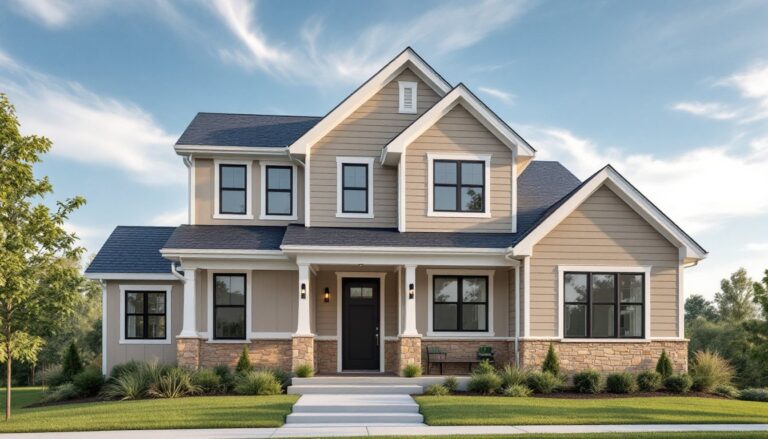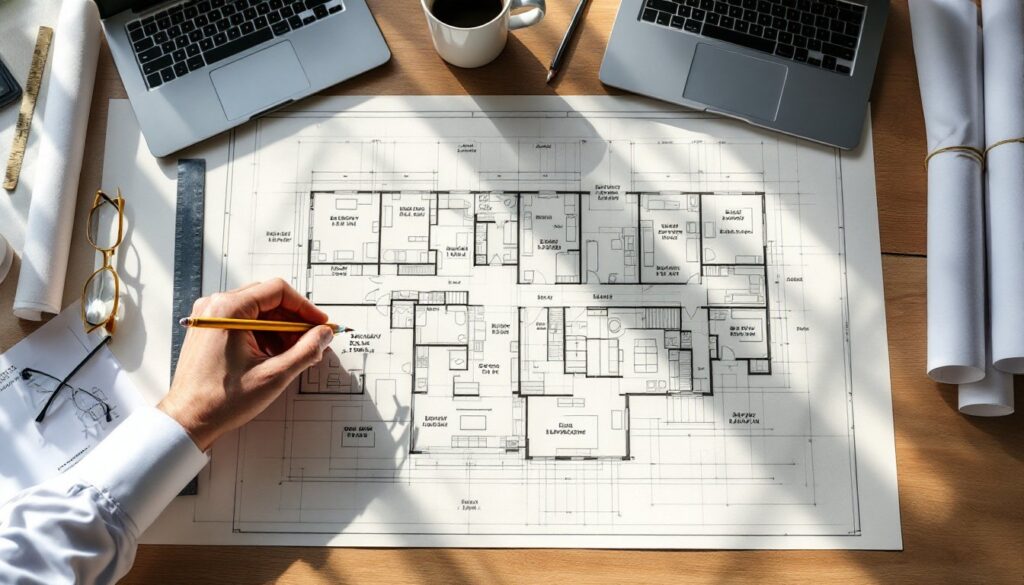
A 5 bedroom house layout offers flexibility that most families eventually wish they had. Whether you’re planning new construction, shopping for a larger home, or considering an addition, understanding how these layouts work, and where they fall short, helps you avoid costly mistakes. This isn’t about square footage bragging rights. It’s about matching bedrooms, bathrooms, and circulation space to how your household actually lives. The difference between a functional five-bedroom plan and a frustrating one often comes down to hallway placement, whether the primary suite is isolated, and what you do with that fifth bedroom. Let’s break down what works.
Table of Contents
ToggleKey Takeaways
- A 5 bedroom house layout works best for growing families, multi-generational households, and remote workers who need dedicated spaces without custom-build costs.
- Single-story 5 bedroom layouts range from 3,000–3,800 sq ft and offer aging-in-place accessibility, while two-story plans fit more bedrooms into 2,400–3,500 sq ft with better energy efficiency.
- Plan for a minimum of three full bathrooms in a 5 bedroom home to avoid morning routine conflicts, and consider Jack-and-Jill designs only if your household doesn’t include teenagers.
- The fifth bedroom adds flexibility for a home office, guest suite, gym, or craft room, but verify that conversions maintain closet requirements and egress windows to preserve bedroom status for resale.
- Prioritize HVAC zoning with separate thermostats and acoustic insulation between shared walls to maintain comfort and reduce noise in a 5 bedroom house layout.
- Building or renovating requires egress windows (5.7 sq ft minimum), 20-amp electrical circuits per bedroom, and structural verification if adding bedrooms to existing structures.
Why a 5 Bedroom House Layout Works for Growing Families
Five bedrooms hit a sweet spot for households that need dedicated spaces without jumping to custom-build territory. The extra bedroom means you’re not scrambling when a teenager demands privacy, an aging parent moves in, or a home office becomes non-negotiable.
Most 5 bedroom layouts range from 2,500 to 4,500 square feet, depending on whether you go single or two-story. Smaller plans (under 3,000 sq ft) typically squeeze bedrooms tighter and rely on a single full bath plus an ensuite. Larger plans add a third or fourth bathroom, walk-in closets, and sometimes a bonus room that doesn’t count as a bedroom due to egress code.
From a resale perspective, five bedrooms appeal to families with three or more kids, multi-generational households, and remote workers who need separation between work and living areas. But they also come with higher HVAC loads, more maintenance, and property taxes that reflect the square footage. If your local market favors 3-4 bedroom homes, you may wait longer to sell.
Permit and code notes: Adding a bedroom (whether through new construction or finishing a basement) requires an egress window that meets International Residential Code (IRC) minimums, typically 5.7 sq ft of opening, with a sill height no more than 44 inches above the floor. Smoke detectors are required in every bedroom and in hallways outside sleeping areas. If you’re converting a bonus room or den into a legal fifth bedroom, budget for window replacement and electrical work.
Popular 5 Bedroom Floor Plan Styles
Single-Story 5 Bedroom Layouts
Ranch-style plans with five bedrooms sprawl, usually landing between 3,000 and 3,800 square feet. The advantage: no stairs, aging-in-place friendly, and easier HVAC zoning since all rooms share one level. The trade-off: larger rooflines and foundations cost more per square foot than stacking bedrooms vertically.
Typical single-story configurations cluster three or four secondary bedrooms on one hallway, often sharing two full baths (Jack-and-Jill layouts are common). The primary suite sits on the opposite end for noise separation. The fifth bedroom often sits near the entry or kitchen, making it a natural candidate for a home office or guest room.
Watch for: Long hallways waste space and make furniture placement awkward. If your plan shows a central hall longer than 12 feet with doors on both sides, question whether the layout could tighten up. For real-world examples of compact single-story 5 bedroom layouts under 3500 square feet, forums like Houzz host threads where owners share pros and cons of their floor plans.
Two-Story 5 Bedroom Configurations
Two-story plans pack five bedrooms into 2,400 to 3,500 square feet by stacking sleeping areas upstairs. This approach minimizes foundation and roof costs, leaves the first floor open for living spaces, and tends to be more energy-efficient (less exterior surface area per square foot).
Most two-story layouts put four bedrooms upstairs with a shared laundry closet or dedicated laundry room, plus two full baths. The fifth bedroom either goes upstairs (making five total on the second floor) or sits on the main level as a flex room. Primary suite placement varies: some builders put it upstairs with the kids for easier nighttime access: others isolate it on the main floor for privacy.
Structural considerations: If you’re retrofitting an older two-story to add a fifth bedroom, verify that ceiling joists can handle floor loads. Attic conversions require engineered lumber or sistering joists to meet code (typically 40 psf live load for bedrooms). This is not a DIY framing job, hire a structural engineer or licensed contractor.
Key Design Considerations for Your 5 Bedroom Layout
Bathroom count and placement: Three full baths minimum. Five people don’t share one bathroom well, especially during morning routines. A Jack-and-Jill bath (two bedrooms sharing one bath with dual sinks and a locking door on each side) works for younger kids but causes friction with teens. Budget for a third full bath if your plan only shows 2.5.
Primary suite isolation: Putting the primary bedroom on a separate wing or floor reduces noise bleed from kids’ bedrooms, but it also means you won’t hear a toddler wake up at night. There’s no universal right answer, match the layout to your household’s current stage.
Closet and storage math: Each bedroom needs a minimum closet to qualify as a legal bedroom (IRC requires 70 square feet of floor space, but closet requirements vary by local code). Walk-ins eat square footage but prevent clutter from spilling into rooms. Plan at least 24 inches of hanging rod per person in shared bedrooms.
Electrical and lighting: National Electrical Code (NEC) requires at least one 15-amp circuit per bedroom, but modern bedrooms often need more, think phone chargers, computers, gaming setups, and clip-on fans. If you’re building or renovating, run 20-amp circuits to secondary bedrooms and add USB outlets at nightstands.
HVAC zoning: A single-zone forced-air system struggles to balance comfort across five bedrooms, especially if they’re split across two floors or opposite wings. Consider a two-zone system with separate thermostats, or ductless mini-splits for rooms that run hot or cold. Designers at homify often showcase layouts that prioritize climate control and air circulation in multi-bedroom homes.
Sound control: Bedrooms sharing a common wall need acoustic insulation, either fiberglass batts (R-13 minimum) or rockwool (better soundproofing). If you’re finishing a basement bedroom, use resilient channel or double-drywall with Green Glue to reduce impact noise from the floor above.
Creative Ways to Use Your Fifth Bedroom
If you don’t need five bedrooms for sleeping, the extra room solves problems most homes struggle with.
Home office: A dedicated workspace beats a kitchen-table setup. Add a 20-amp circuit for equipment, hardwired ethernet, and task lighting on a separate switch. If the room has a closet, use it for filing and supplies instead of removing it (keeping the closet maintains bedroom status for resale).
Guest suite: Combine a full or three-quarter bath with the fifth bedroom to create an independent guest area. If it’s on the main floor, aging parents or visitors with mobility issues won’t navigate stairs. Consider a pocket door to save floor space.
Craft or hobby room: Sewing, model-building, and art projects need containment. Add a work-height counter (36 inches), pegboard for tool storage, and bright overhead lighting (4000K-5000K color temperature). Vinyl plank flooring handles spills better than carpet.
Home gym: Bedroom dimensions (10×12 or larger) fit a squat rack, bench, and cardboard. Reinforce the floor if you’re installing heavy equipment upstairs, Olympic plates and racks can exceed standard residential floor loads. Rubber mats protect subfloors. For advanced techniques on reinforcing floor joists or adding structural support, Fine Homebuilding provides detailed framing and building science guides.
Playroom or teen hangout: Centralizing toys or game consoles in one room keeps clutter out of living areas. Use durable, washable paint (satin or semi-gloss sheen) and consider luxury vinyl tile if kids are young. Built-in cubbies or modular storage (IKEA Kallax-style units) keep floors clear.
Walk-in closet conversion: If your primary bedroom lacks storage, the adjacent fifth bedroom can become a dressing room. Frame a new doorway (verify whether the wall is load-bearing first, if it runs perpendicular to ceiling joists, it likely is), install closet systems, and add a full-length mirror. You’ll lose a bedroom for resale purposes, so weigh the trade-off carefully.
Conclusion
A 5 bedroom layout works when it fits how your household operates now and adapts to what’s coming. Prioritize bathroom count, soundproofing, and mechanical systems over square footage alone. If you’re building or buying, walk the plan with a tape measure and painter’s tape on the floor, room dimensions on paper don’t always translate to functional space. And if that fifth bedroom sits empty, it’s working exactly as it should: giving you options instead of forcing compromises.