Shopping for flowering house plants isn’t like buying a throw pillow. You’re bringing home a living thing that either thrives or sulks, depending on how well you match plant needs to your actual home conditions. The good news? There’s never been a better time to buy blooming indoor plants. Growers have refined cultivars that flower reliably under typical home lighting, and online retailers now ship healthy specimens with solid guarantees. Whether someone’s adding a pop of color to a north-facing apartment or filling a sunroom with tropical blooms, knowing what to look for, and where to shop, makes all the difference.
Table of Contents
ToggleKey Takeaways
- Flowering house plants improve indoor air quality by filtering VOCs and provide psychological benefits like reduced stress and enhanced creativity, making them functional additions beyond decoration.
- When shopping for flowering house plants for sale, prioritize inspecting foliage, roots, and buds over open blooms—healthy white roots, vibrant leaves, and multiple colored buds indicate a thriving specimen.
- African violets, peace lilies, and begonias are ideal beginner-friendly flowering house plants that bloom reliably with moderate care, while orchids and hibiscus deliver dramatic results for experienced growers with proper light and humidity.
- Local nurseries offer the best quality control and expertise, but online specialty retailers like Bloomscape and The Sill provide convenience with improved packaging guarantees—avoid impulse purchases from grocery stores without immediate repotting.
- Match your home’s light conditions to the plant’s needs: beginner varieties tolerate moderate light, while hibiscus and some orchids demand bright, direct sunlight for consistent blooming.
- Always quarantine new flowering house plants for two weeks before introducing them to your existing collection to prevent pests and diseases from spreading.
Why Choose Flowering House Plants for Your Home?
Flowering house plants deliver more than aesthetics. They mark the seasons indoors, rewarding attentive care with blooms that foliage-only plants can’t match. A well-chosen flowering plant signals to guests that the homeowner knows their way around horticulture, not just interior design.
From a practical standpoint, many flowering varieties also improve indoor air quality. Research from NASA’s Clean Air Study and subsequent work shows that plants like peace lilies and orchids actively filter volatile organic compounds (VOCs) from paint, furniture, and cleaning products. They’re not air purifiers in the HVAC sense, but they contribute measurably in smaller spaces.
Blooming plants also offer psychological benefits backed by studies from institutions like Texas A&M and the University of Technology Sydney. Exposure to flowers indoors has been linked to reduced stress, improved mood, and even enhanced creativity. For home offices or high-traffic living areas, that’s a functional upgrade, not just decorative flair.
Finally, flowering house plants force a routine. They demand attention to light cycles, watering schedules, and nutrient needs. That structure appeals to DIYers who enjoy tinkering and adjusting variables until they get results. It’s problem-solving with a payout you can photograph.
Top Flowering House Plants You Can Buy Right Now
Easy-Care Flowering Plants for Beginners
African violets (Saintpaulia ionantha) remain the gold standard for beginners. They bloom nearly year-round under consistent conditions, tolerate moderate humidity, and thrive in east- or west-facing windows. Look for varieties with compact rosettes and multiple flower buds showing color. They prefer 70–75°F daytime temps and slightly cooler nights. Water from below to avoid spotting the fuzzy leaves, and use a balanced 14-12-14 fertilizer diluted to half strength every two weeks during active growth.
Peace lilies (Spathiphyllum spp.) aren’t true lilies, but their white spathes (modified leaves) look like flowers and last for weeks. They’re nearly indestructible, tolerating low light and irregular watering better than most bloomers. They’ll flower more reliably with bright, indirect light and consistent moisture. Watch for drooping leaves, that’s the plant’s way of saying it needs water, and it recovers quickly once watered.
Kalanchoe (Kalanchoe blossfeldiana) is a succulent that produces dense clusters of red, pink, orange, yellow, or white flowers. It needs bright, direct light for at least four hours daily and well-draining cactus mix. Overwatering kills more kalanchoe than any pest. Let the soil dry completely between waterings, and cut back flower stalks after blooms fade to encourage a second flush.
Begonias (Begonia spp.), especially wax and rex varieties, offer continuous blooms with minimal fuss. They prefer consistent moisture, 60–70°F temps, and bright indirect light. Pinch off spent flowers to keep new buds forming. For those looking to expand their collection of house plants, begonias offer cultivars ranging from compact to trailing forms.
Statement Flowering Plants for Interior Design Enthusiasts
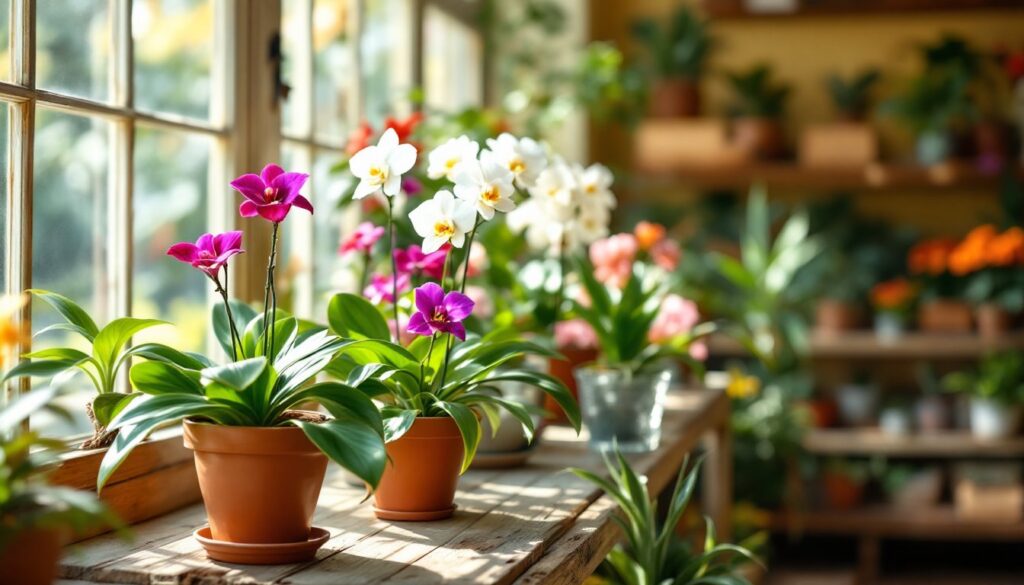
Orchids (Phalaenopsis spp.), particularly moth orchids, have become the go-to for designers. They’re sold everywhere from big-box stores to specialty nurseries, and modern hybrids rebloom reliably. Look for plants with thick, green roots visible through clear pots, that’s a sign of health. Orchids need bright, indirect light, high humidity (50–70%), and a specialized orchid bark mix that drains fast. Water weekly by soaking the pot for 10–15 minutes, then draining completely. After flowers drop, cut the spike above the second node to encourage a new bloom stalk.
Anthuriums (Anthurium andraeanum) produce glossy, heart-shaped spathes in red, pink, white, or even black. They’re epiphytes in the wild, so they prefer a chunky, well-aerated potting mix with bark and perlite. They need bright, indirect light and consistent warmth (65–80°F). Mist the leaves regularly or use a pebble tray to boost humidity. Anthuriums flower year-round if conditions stay stable.
Hibiscus (Hibiscus rosa-sinensis) brings a tropical punch indoors. The flowers are large, often 4–6 inches across, but short-lived, lasting only a day or two. The plant compensates by producing blooms continuously during the growing season. Hibiscus demands full sun (at least six hours of direct light), regular watering, and high humidity. It’s not beginner-friendly, but for a sunroom or bright south-facing window, few plants deliver more drama. Fertilize with a high-potassium bloom booster every two weeks during spring and summer.
Bromeliads (Bromeliaceae family) offer architectural foliage and long-lasting flower spikes in electric colors. They’re epiphytic, so they grow well mounted or in fast-draining mixes. Keep the central “cup” filled with water, and provide bright, indirect light. Bromeliads flower once, then the main rosette dies, but it produces offsets (pups) that grow into new plants. It’s a slow process, but the blooms can last months.
Where to Buy Flowering House Plants: Best Sources and What to Look For
Local nurseries and garden centers remain the best option for hands-on buyers. Staff can answer questions about care, and shoppers can inspect root systems, check for pests, and assess bloom quality before purchasing. Independent nurseries often carry harder-to-find varieties and can special-order specific cultivars. They also acclimate plants to local conditions, which gives them a head start over shipped specimens.
Big-box home improvement stores (Lowe’s, Home Depot) stock the basics, orchids, peace lilies, kalanchoe, begonias, at competitive prices. Inventory turns over quickly, so plant quality varies. Shop early in the week when fresh stock arrives, and avoid clearance racks unless you’re confident in your rehab skills. These stores rarely provide detailed care tags, so research beforehand.
Online specialty retailers like Bloomscape, The Sill, and Pistils Nursery ship mature, well-rooted plants with detailed care instructions and guarantees. Prices run higher than box stores, but packaging has improved dramatically. Most use insulated boxes, heat packs (in winter), and custom inserts to prevent shifting. Read reviews specific to plant type, some species (like orchids and succulents) ship better than others (like ferns or delicate tropicals).
Grocery stores and florists sell flowering plants as impulse buys, often in decorative pots with foil wraps. Remove the foil immediately, it traps water and promotes root rot. These plants are typically “forced” into bloom for retail appeal and may sulk after purchase. They’re fine for temporary displays but don’t expect long-term performance without proper repotting and care adjustments.
Plant swaps and local Facebook/Nextdoor groups offer budget-friendly options and the chance to connect with experienced growers. Many hobbyists propagate and sell divisions of mature plants. Quality varies, but knowledgeable sellers often share cuttings of rare or hard-to-find varieties. Ask about pest history and inspect carefully before bringing new plants home. For design inspiration and plant care tips, many homeowners turn to comprehensive guides that help match plants to specific room conditions.
Farmers markets increasingly feature plant vendors, especially in spring and early summer. Prices are reasonable, and growers can answer questions about hardiness and care. Selection leans toward seasonal bloomers, so it’s a good source for annuals or plants intended for patios that can winter indoors.
How to Choose Healthy Flowering Plants When Shopping
Start with the foliage, not the flowers. Leaves should be vibrant, firm, and free of yellowing, browning, or spotting. Limp or wilted leaves suggest root problems or disease. Check the undersides of leaves and along stems for aphids, spider mites, mealybugs, or scale. A magnifying glass helps. Even a few pests can explode into an infestation once the plant’s indoors.
Inspect the root system if possible. Gently tip the pot and slide the plant partway out. Healthy roots are white or light tan, firm, and spread evenly through the soil. Mushy, dark, or foul-smelling roots indicate rot. If roots are circling densely at the pot’s edge, the plant is root-bound and should be repotted soon after purchase.
Look for multiple buds, not just open flowers. A plant covered in blooms may be at the end of its cycle. Buds showing color promise weeks of future flowers. Some growers force early blooms with hormones or light manipulation, those plants may not rebloom reliably without the same conditions.
Check the soil. It should be slightly moist, not bone-dry or soggy. Dry soil suggests neglect: waterlogged soil suggests overwatering or poor drainage. Lift the pot, it should feel substantial. A too-light pot means the plant’s dried out repeatedly, stressing the roots. Understanding home improvement techniques for indoor gardening helps integrate plant care into broader household routines.
Avoid plants with leggy growth, yellowing lower leaves, or salt crust on the soil surface (a sign of over-fertilization or poor water quality). Skip any plant sitting in standing water or displayed in a drafty, poorly lit area, it’s already stressed.
Ask about the plant’s history. How long has it been in the store? Where was it grown? Has it been treated for pests? Reputable sellers track this information. If buying online, read the retailer’s packaging and shipping policies. Look for guarantees that cover arrival condition, not just “alive on delivery.”
Quarantine new plants for two weeks before placing them near your existing collection. This gives time for hidden pests or diseases to show up. Keep the new plant in a separate room if possible, and inspect it every few days. It’s not overkill, it’s standard practice among serious growers.
Conclusion
Buying flowering house plants isn’t guesswork once you know what healthy specimens look like and where to find them. Match the plant’s needs to your home’s light, temperature, and humidity, and you’ll get blooms that last seasons, not days. Start with proven performers, inspect carefully, and don’t skip the quarantine step. The payoff is a home filled with color that you grew yourself.