Bathrooms are notoriously difficult spaces for decor upgrades. Limited floor space, fluctuating humidity, and often terrible lighting make most design choices impractical. But hanging plants? They’re the exception. Suspended greenery takes advantage of vertical real estate nobody’s using, thrives in the moisture-rich environment, and can actually improve air quality. The key is choosing varieties that tolerate low light and high humidity, and installing them correctly so they stay put. This guide covers plant selection, hanging methods that won’t damage tile or drywall, and maintenance tips to keep bathroom plants looking healthy instead of half-dead.
Table of Contents
ToggleKey Takeaways
- Bathroom hanging plants are ideal for leveraging vertical space while thriving in high-humidity environments that tropical varieties like pothos and philodendrons naturally prefer.
- Beginner-friendly options like pothos, spider plants, and heartleaf philodendron tolerate low light and irregular watering, making them the best starting choices for bathroom hanging gardens.
- Proper installation requires locating wall studs and using stud-mounted hooks or toggle bolts rated for at least 15 pounds, while ceiling hooks work best for humidity-rich areas like above the tub or shower.
- Water bathroom hanging plants only when the top 1-2 inches of soil are dry, as drainage holes and catch trays are essential to prevent root rot in moisture-heavy environments.
- Successful bathroom hanging plants need consistent humidity, indirect light, and occasional pruning above leaf nodes, but require minimal fertilizing and fewer waterings than plants in other rooms.
Why Hanging Plants Are Perfect for Bathrooms
Bathrooms combine three conditions that most houseplants either love or hate: high humidity, inconsistent light, and temperature swings. Tropical varieties evolved in understory environments with similar conditions, making them naturally suited to bathroom life.
Humidity levels in bathrooms regularly spike to 70-90% during showers, then drop back down. Most ferns, pothos, and philodendrons originated in rainforest canopies where this exact pattern occurs daily. They’ve adapted to absorb moisture through their leaves, not just roots.
Vertical space in bathrooms is almost always underutilized. Floor space gets crowded with hampers, scales, and storage. Counters hold toiletries. But the area above shoulder height? Usually empty. Hanging plants claim that real estate without interfering with function.
Air purification is a secondary benefit. While NASA’s famous clean air study has been overinterpreted by home design enthusiasts, plants do filter trace amounts of VOCs from cleaning products, shampoos, and synthetic materials. The effect is modest, you’d need dozens of plants for measurable improvement, but it doesn’t hurt.
One practical advantage: plants suspended at eye level or higher stay out of reach of pets and small children. No knocked-over pots, no dirt on tile, no risk of a dog eating a philodendron leaf.
Best Hanging Plants for Bathroom Environments
Low-Light Champions
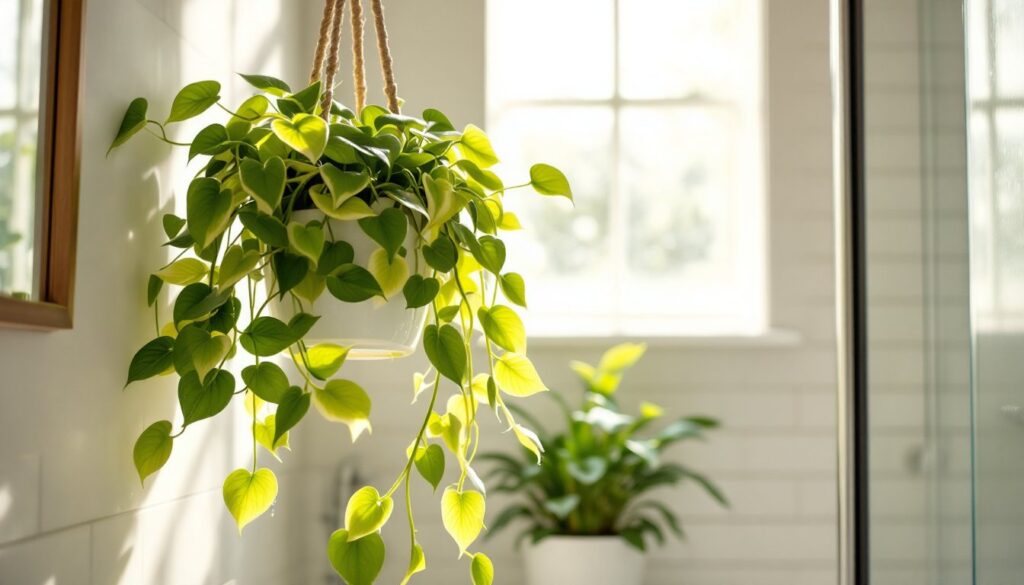
Pothos (Epipremnum aureum) is the beginner’s plant for a reason. It tolerates everything: low light, missed waterings, and wide temperature ranges. The trailing vines can grow 10+ feet if left unchecked. Golden pothos has yellow variegation: marble queen is white and green. Both work. Propagation is dead simple, snip a 4-6 inch cutting below a node, stick it in water, and roots appear in 7-10 days.
Heartleaf philodendron (Philodendron hederaceum) looks similar to pothos but has thinner, more heart-shaped leaves. It’s equally forgiving and grows slightly faster. The main difference is light requirement: philodendrons can handle even dimmer conditions than pothos, making them ideal for windowless bathrooms with only artificial light.
Spider plants (Chlorophytum comosum) produce arching leaves and baby plantlets (called pups) on long stems. They’re nearly impossible to kill. Spider plants prefer indirect light but adapt to low light by growing slower. The variegated varieties (white or yellow stripes) need slightly more light to maintain color contrast.
ZZ plant (Zamioculcas zamiifolia) isn’t commonly seen as a hanging plant, but young specimens in hanging pots work well. The thick, waxy leaves store water, so it tolerates neglect. Growth is slow, which means less frequent trimming.
Humidity-Loving Varieties
Boston fern (Nephrolepis exaltata) is the classic bathroom fern. It craves humidity and indirect light. The fronds can spread 2-3 feet wide, so it needs space. Boston ferns are fussier than pothos, dry out the soil completely and the fronds turn brown and crispy. Consistent moisture and misting help, but the bathroom environment usually provides enough humidity on its own.
String of pearls (Senecio rowleyanus) is a succulent with bead-like leaves on trailing stems. Even though being a succulent, it tolerates bathroom humidity well as long as the soil dries between waterings. It needs brighter light than ferns or pothos, place it near a window if possible. Overwatering is the main killer: the beads shrivel when thirsty but rot when soggy.
English ivy (Hedera helix) adapts to a wide range of light and humidity conditions. The trailing vines grow aggressively, and it’s easy to propagate cuttings for additional plants. Fair warning: ivy is toxic to pets and can cause skin irritation in some people, so handle it with gloves if you’re sensitive.
Staghorn fern (Platycerium bifurcatum) mounts to wood planks or hangs in baskets. It’s an epiphyte, meaning it grows on trees in nature and absorbs water and nutrients through its leaves. Staghorns need bright, indirect light and regular misting. They’re more advanced than pothos but create a dramatic focal point.
How to Hang Plants in Your Bathroom
Bathroom walls present unique challenges: tile, drywall behind moisture-resistant greenboard, and limited stud spacing. Hanging methods depend on weight and surface type.
For drywall or greenboard: Use a stud finder to locate framing. Studs in bathrooms are typically 16 inches on center (sometimes 24 inches in older homes). Screw a ceiling hook or wall-mount bracket directly into the stud using a #8 or #10 wood screw at least 2 inches long. This supports 10-20 pounds easily, more than enough for most hanging plants.
If the stud isn’t where you want the plant, use a toggle bolt or molly bolt rated for at least 15 pounds. Drill a pilot hole, insert the anchor, and tighten. Toggle bolts grip the back of the drywall and distribute weight better than plastic anchors. Don’t use standard plastic anchors in bathrooms, moisture weakens drywall over time, and the anchor will pull out.
For tile: Drilling through ceramic or porcelain tile requires a carbide-tipped masonry bit and a variable-speed drill. Mark the spot with painter’s tape to prevent the bit from skipping. Start at low speed with light pressure. Once through the tile (you’ll feel the resistance change), switch to a standard bit if you’re going into drywall, or continue with the masonry bit if you hit concrete backer board. Use a plastic sleeve anchor or toggle bolt depending on what’s behind the tile.
If you’re drilling into grout lines instead of tile, it’s easier but weaker. Grout crumbles under stress, so this only works for lightweight plants (under 3 pounds).
Ceiling hooks are ideal for hanging plants over the tub or in the shower, where they’ll get maximum humidity. Locate a ceiling joist with a stud finder (joists run perpendicular to the room’s length, typically 16 or 24 inches apart). Drill a pilot hole and install a ceiling hook with a swivel eye. The swivel prevents the plant from twisting and tangling its hanger.
Tension rods work between walls or in shower alcoves if the span is 6 feet or less. Use a heavy-duty rod rated for at least 20 pounds and add S-hooks to hang multiple plants. This method requires no drilling but limits placement options.
Safety note: Wear safety goggles when drilling overhead or into tile. Ceramic dust and tile chips can cause eye injuries. Use a HEPA vacuum or damp cloth to clean up dust, don’t blow it around.
Caring for Your Bathroom Hanging Plants
Bathroom plants need less frequent watering than plants in other rooms, but they still need attention. The shower humidity keeps leaves happy, but soil moisture varies.
Watering schedule depends on the plant and pot material. Plastic pots retain moisture longer than terracotta or ceramic. Stick your finger 1-2 inches into the soil, if it’s dry, water thoroughly until it drains from the bottom. For ferns and pothos, this might be every 7-10 days. For succulents like string of pearls, wait until the soil is completely dry, which could be 2-3 weeks.
Hanging plants dry out faster because warm air rises. If your plant is mounted near a ceiling vent or heat lamp, check soil moisture more frequently.
Drainage is critical. Hanging pots must have drainage holes, and you need a catch tray or saucer unless the plant hangs over the tub. Water until it runs out the bottom, wait 10 minutes, then empty the saucer. Sitting in standing water causes root rot, especially in high-humidity environments.
Light requirements vary by plant. Bathrooms with windows receive indirect light, which works for most species listed here. Windowless bathrooms rely on artificial light, LED bulbs work, but plants grow slower. If your plant stretches toward the light (a condition called etiolation), it’s not getting enough. Rotate the pot every couple of weeks to encourage even growth.
Fertilizing is optional for slow-growing bathroom plants. If you do fertilize, use a diluted liquid fertilizer at half strength once every 4-6 weeks during spring and summer. Don’t fertilize in winter when growth slows.
Pruning keeps vining plants like pothos and philodendron under control. Snip stems just above a node (the bump where leaves attach) using clean scissors or pruning shears. The plant will branch at the cut, creating a fuller appearance. Compost the cuttings or propagate them in water.
Pest issues are rare in bathrooms, but fungus gnats can appear if soil stays too wet. Let the top inch of soil dry completely between waterings. Yellow sticky traps catch adult gnats: letting soil dry kills larvae.
Conclusion
Hanging plants turn dead air space into functional decor, and bathrooms provide the humidity and low-light conditions that many tropical species prefer. Success comes down to three things: choosing plants suited to your bathroom’s light levels, installing hangers that won’t fail under load, and watering based on soil moisture rather than a rigid schedule. Start with pothos or spider plants if you’re new to houseplants, they tolerate mistakes. Once you’ve kept those alive for six months, branch out to ferns or more demanding varieties.