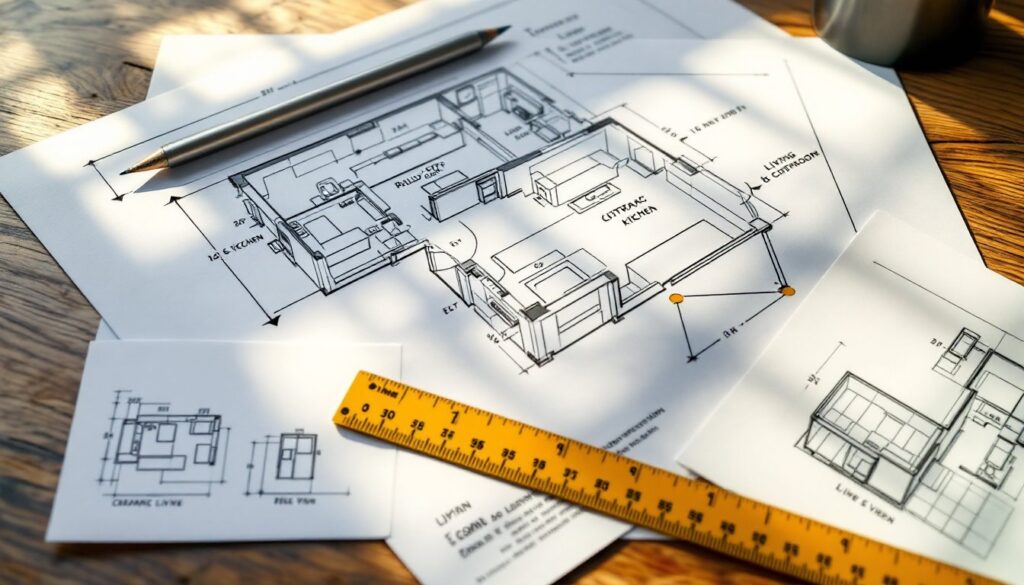
A 300 sq ft tiny house isn’t just about living small, it’s about designing smart. At this size, every decision matters: where the bed goes, how the kitchen flows, whether to build up or stay single-level. Get the floor plan right, and a 300 sq ft space can feel surprisingly livable. Mess it up, and you’ll be tripping over furniture and hunting for storage within a week. This guide breaks down practical layouts, design principles, and common pitfalls so builders and DIYers can create tiny house plans that actually work.
Table of Contents
ToggleKey Takeaways
- 300 sq ft tiny house floor plans maximize livability by strategically separating sleeping, cooking, and living zones through multizoning rather than relying solely on walls or convertible furniture.
- Vertical space is essential in a 300 sq ft design—aim for 10–13 ft ceilings to accommodate lofts, high storage, and natural light while maintaining standard headroom requirements.
- Loft-style layouts nearly double usable space by stacking sleeping quarters above the main floor, though daily ladder climbing and limited headroom are trade-offs to consider.
- Built-in furniture, pocket doors, and staircase storage maximize functionality in 300 sq ft floor plans without creating dead zones that freestanding pieces often leave behind.
- A full-scale mock layout using cardboard boxes reveals clearance and traffic-flow issues that floor plan drawings miss, preventing costly mistakes during construction.
- Stacking your plumbing core (kitchen, bathroom, laundry) along one wall reduces costs and complexity while simplifying maintenance and hookups for trailer-based tiny homes.
Why 300 Square Feet Is the Sweet Spot for Tiny Living
The 300 sq ft range sits at a practical crossroads. It’s large enough to include a full kitchen, bathroom, and dedicated sleeping area without feeling like a camping trailer, yet small enough to qualify as a tiny house under most zoning definitions (typically under 400 sq ft).
This size fits on standard tiny house trailers (usually 8.5 ft wide by 20–24 ft long) without requiring oversize permits for road transport. For foundation-built tiny homes, 300 sq ft keeps material costs manageable, you’re looking at roughly 12 ft × 25 ft or 10 ft × 30 ft footprints, which use standard lumber dimensions without excessive cutting and waste.
From a livability standpoint, 300 sq ft provides enough room for one person to live comfortably long-term or two people who don’t mind close quarters. It’s also the minimum size where you can realistically separate sleeping, cooking, and living zones without resorting to convertible furniture for every function.
Most jurisdictions that allow tiny houses as accessory dwelling units (ADUs) set minimums around 150–200 sq ft and maximums around 800–1,000 sq ft, making 300 sq ft a safe middle ground for permit approval.
Essential Design Principles for 300 Sq Ft Floor Plans
Vertical space is your second floor plan. In a 300 sq ft footprint, thinking up is as important as thinking out. Standard residential ceiling heights run 8 ft, but tiny houses often push to 10–13 ft to accommodate lofts or high storage. If building on a trailer, check your total height limit (usually 13.5 ft to clear highway overpasses).
Circulation paths need 30–36 inches minimum. Hallways and walkways should allow comfortable movement without turning sideways. Measure your floor plan with furniture in place, tight clearances look fine on paper but create daily frustration in practice.
Multizoning beats open chaos. Even in 300 sq ft, define distinct zones for sleeping, cooking, and sitting. This doesn’t mean walls everywhere, but strategic furniture placement, partial dividers, or level changes (like a raised platform) help spaces feel intentional rather than cluttered. Many successful small space living ideas rely on visual separation rather than full partitions.
Plumbing cores save money and complexity. Stack your wet areas, kitchen sink, bathroom, and any laundry hookups, along one wall or back-to-back. This minimizes plumbing runs, reduces the chance of leaks, and simplifies hookups if you’re building on a trailer. A concentrated plumbing core also makes winterization and maintenance easier.
Natural light prevents cave syndrome. Aim for windows on at least two walls, ideally three. In a small footprint, dark corners feel oppressive fast. Code typically requires egress windows in sleeping areas (minimum 5.7 sq ft opening, 24-inch height, 20-inch width), so plan loft access and window placement early.
Standard door widths (30–32 inches) and appliance sizes (24-inch ranges, apartment-size fridges) dictate layout. Measure your must-have items first, then design around them. A 30-inch fridge won’t fit where you drew a 24-inch box.
Popular 300 Sq Ft Tiny House Layout Styles
Open-Concept Single-Level Designs
Single-level plans keep everything on one floor, trading vertical storage for accessibility and ease of construction. These work well for folks who can’t or won’t climb a ladder nightly, and they simplify HVAC and electrical runs, no need to heat a loft or wire overhead outlets.
A typical single-level 300 sq ft layout might run 10 ft × 30 ft or 12 ft × 25 ft. Picture a bathroom and closet at one end (about 6 ft deep), a kitchenette along one long wall (8–10 ft), and an open living/sleeping area in the remaining space. Some designs use a murphy bed or daybed to blur the line between bedroom and living room.
Pros: No ladder climbing, easier for resale or aging in place, simpler framing and insulation.
Cons: Less privacy if hosting guests, harder to separate sleeping from living, reduced overhead storage.
Single-level plans require disciplined furniture choices. A full-size sofa eats precious floor space: a loveseat or built-in bench with storage underneath makes more sense. Consider pocket doors or barn doors for the bathroom, standard swing doors claim 8–10 sq ft of clearance.
Loft-Style Plans With Sleeping Areas Above
Loft plans are the tiny house default for good reason: they nearly double usable space by stacking sleeping above living. A sleeping loft typically runs 6–7 ft wide (the full interior width of a trailer-based tiny house) by 8–10 ft long, with 3–4 ft of headroom. That’s enough for a queen mattress and minimal sit-up space.
Ground floor layouts in loft plans often dedicate 60–70 sq ft to the kitchen, 25–35 sq ft to the bathroom, and leave 150–175 sq ft for living, dining, and storage. Ladder or staircase access takes up 4–10 sq ft depending on design. Many budget home renovation stories feature creative loft ladder solutions, from ship’s ladders to storage stairs.
Pros: Clear separation of sleeping and living, more floor space for daytime activities, feels less cramped.
Cons: Loft access is a daily climb (awkward when sick or carrying laundry), limited headroom, hot in summer (heat rises), not suitable for everyone.
Safety note: Install a guardrail at the loft edge (minimum 36 inches high per IRC). Use a sturdy ladder or alternating-tread stair, and secure it to the wall. Loft floors need proper joist spacing (typically 16 inches on center with 2×6 or 2×8 joists) to support live loads.
Some builders add a small second loft over the bathroom for storage or a home office nook, this works if ceiling height allows.
Space-Saving Features to Include in Your Floor Plan
Built-in furniture eliminates gaps and wasted space. A custom bench with lift-top storage, a fold-down desk, or a platform bed with drawers underneath all serve double duty. Freestanding furniture in a 300 sq ft house creates dead space behind and beside pieces that you can’t access or use.
Pocket doors and barn doors save swing clearance. A standard 30-inch door swinging into a room claims roughly 8 sq ft. Pocket doors slide into the wall cavity (requires 2×6 wall framing and a pocket door kit), while barn doors slide along the wall face (easier retrofit, but less sound isolation).
Vertical storage runs floor to ceiling. In a tiny house, the top two feet of wall space is prime real estate. Install cabinets, shelves, or hooks up to the ceiling. Use open shelving in the kitchen to avoid the visual weight of upper cabinets, or choose glass-front cabinets to keep sight lines open. The Kitchn frequently covers small kitchen solutions that prioritize vertical and corner storage.
Staircase storage beats a simple ladder. If you’re committed to a loft, consider alternating-tread stairs with built-in drawers or cabinets in each tread. This design uses about 6–8 sq ft of floor space but adds 15–20 cubic feet of storage. It’s more material and labor than a ladder, but far more functional.
Combination appliances reduce footprint. A washer-dryer combo unit, a two-burner cooktop instead of a four-burner range, or an under-counter mini fridge all free up space. Just ensure you’re okay with the trade-offs, combo washer-dryers take twice as long per load, and a two-burner cooktop limits your cooking capacity.
Exterior storage sheds or bump-outs. If local codes allow, a small exterior shed (4 ft × 6 ft) for tools, bikes, or seasonal gear keeps the interior uncluttered. Some tiny house builders add small bump-outs (12–18 inches deep) for a pantry or coat closet without eating interior square footage.
Common Floor Plan Mistakes to Avoid
Forgetting door swing and drawer clearance. On paper, a 30-inch aisle looks fine. In reality, when the oven door is open or a drawer is pulled out, that aisle becomes impassable. Add 20–24 inches in front of appliances and drawers, and make sure doors don’t collide when opened simultaneously.
Skipping a mock layout. Before framing or ordering a trailer, tape out the floor plan full-scale on a driveway or garage floor. Use cardboard boxes to represent furniture and appliances. Walk through your daily routine, cooking, showering, getting dressed, and note what feels awkward. This catches issues that drawings miss.
Underestimating storage needs. Even minimalists own stuff. Plan for at least 40–60 cubic feet of storage (closets, cabinets, under-bed, loft storage combined). Include a coat closet near the entry, a pantry for dry goods, and a linen closet for towels and bedding. Insufficient storage turns tiny house living into a daily game of Tetris.
Ignoring HVAC and electrical placement early. A mini-split heat pump head unit is about 12 inches tall and 36 inches wide, it needs wall space and can’t be blocked by furniture. Electrical panels, water heaters, and breaker boxes also claim space. Mark these on your floor plan before finalizing furniture layout.
Overcomplicating the design. Angled walls, curved partitions, and multi-level platforms look cool in renderings but add cost, complexity, and wasted space. Stick to rectangles and right angles unless you’re an experienced builder. Simple framing is faster, cheaper, and easier to insulate and finish.
Neglecting the building code and permit process. Even if you’re building a mobile tiny house, local codes often apply during construction. If you’re planning a foundation-built ADU, expect requirements for minimum ceiling heights (usually 7 ft), egress windows, stair dimensions (if you’re calling a loft a bedroom), and electrical/plumbing permits. Check with your local building department before finalizing plans. If your design includes structural changes or utility hookups, hire a licensed professional to review the plans and pull permits. DIYing the design is fine: ignoring code is not.